
LIFE Smart Agromobility Project
17 de February de 2023KEPLER collaborates in the LIFE Smart Agromobility project with the University of Valladolid with the design and supply of a biogas to biomethane purification system. The system, based onCO2 consumption in microalgae cultures, has a production capacity of up to 10 m3 of biomethane per hour and is installed in a pig farm.
The biogas produced through the process of anaerobic digestion of pig slurry is purified by contacting the microalgae culture. The designed bubbling column allows for maximumCO2 capture generating a quality biomethane that can be used as biofuel in vehicles in the form of “Compressed Natural Gas”.
Publicaciones más recientes
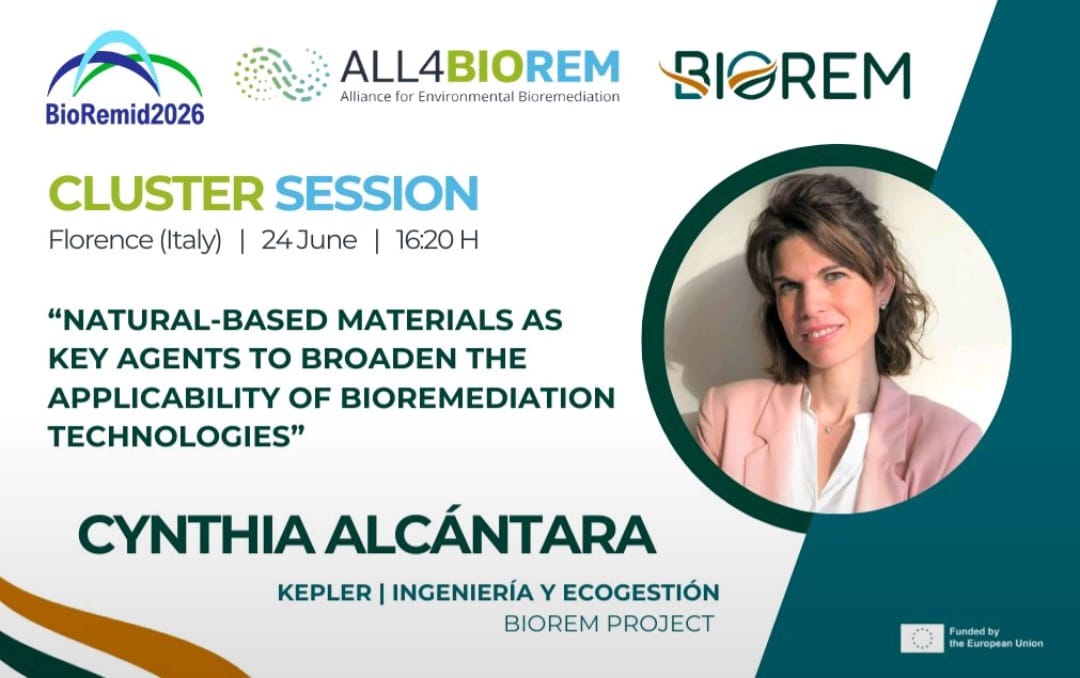
Participation in the 4th International Meeting on New Strategies for Bioremediation and Environmental Restoration – BioRemid 2026
Last Wednesday, 24th June, our colleague Cynthia Alcántara delivered a presentation entitled “Nature-Based Materials as Key Agents for Broadening the Applicability of Bioremediation Technologies” at the 4th International Meeting on New Strategies for Bioremediation and Environmental Restoration (BioRemid 2026), held in Florence, Italy. The main take-home messages of this talk were: KEPLER team would like […]
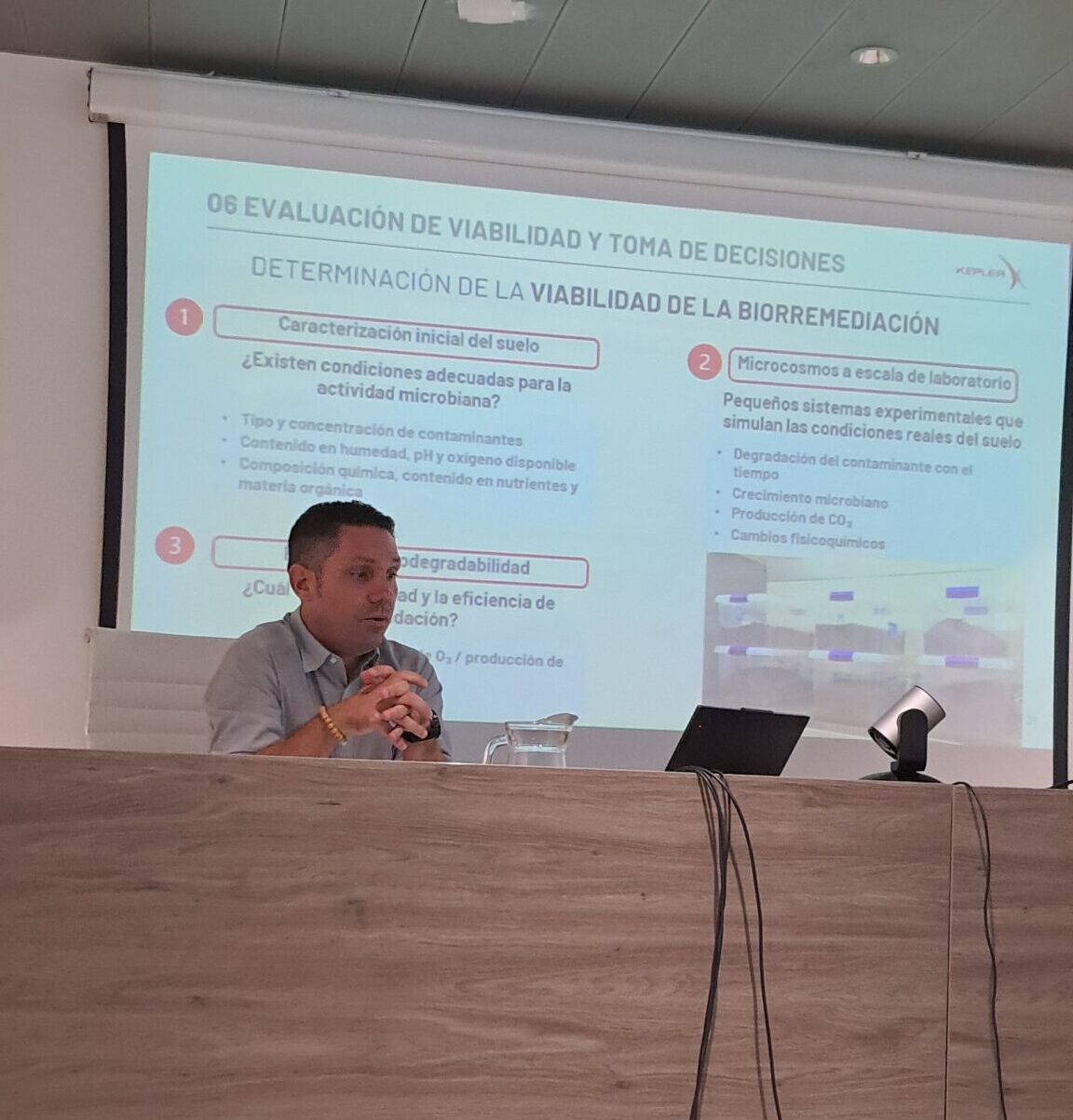
AAP Training Course Soil Biodiversity Monitoring and Soil Health: Applications. Junta de Andalucía
Last Tuesday, our colleague Justo Tenorio took part as a lecturer in the IAAP Training Course, organised by the Waste and Soil Quality Service of the Directorate-General for Environmental Sustainability and Circular Economy of the Regional Government of Andalusia, entitled “Soil Biodiversity Monitoring and Soil Health: Applications”. During his session on opportunities for environmental valorisation, […]
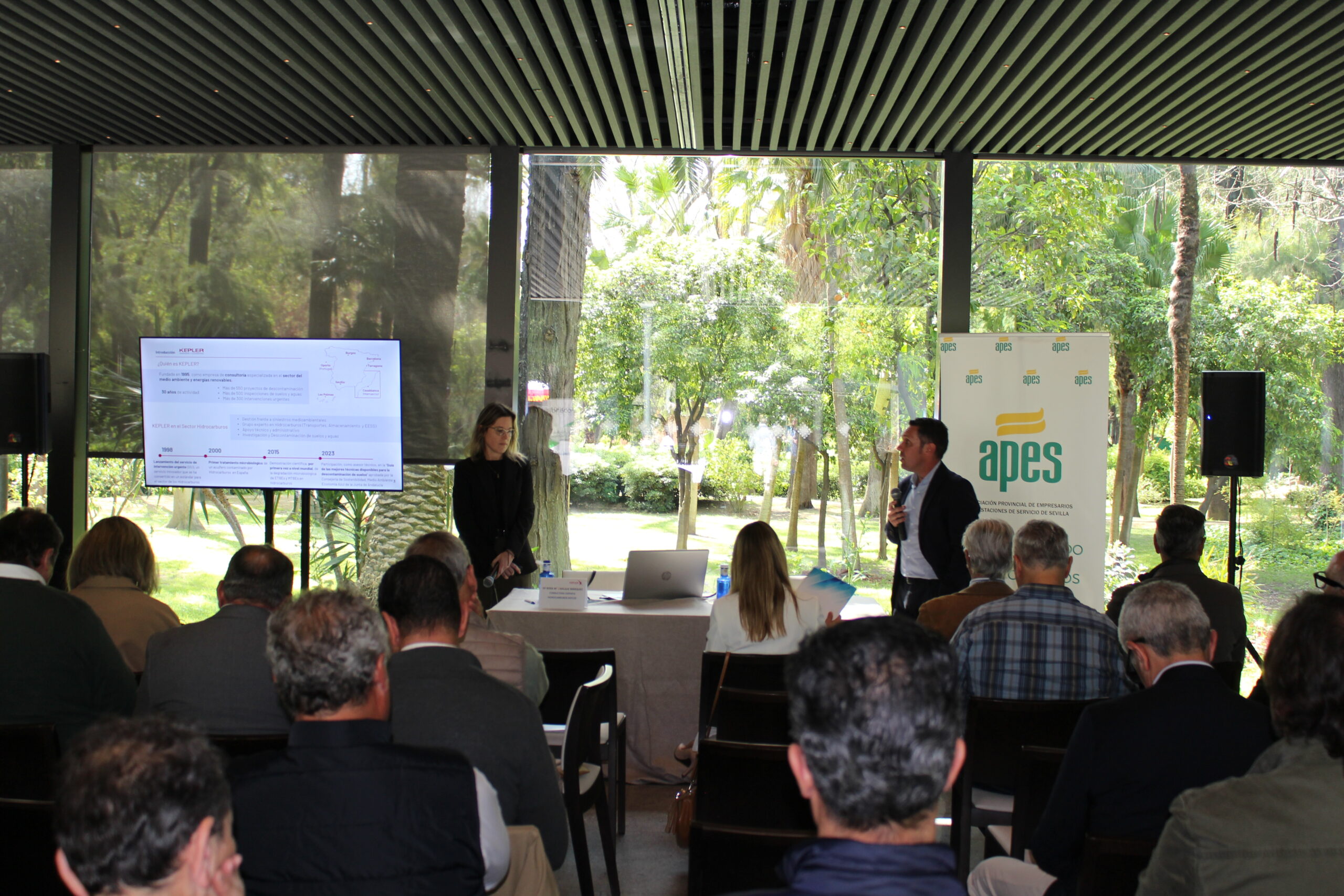
Participation in the APES 2026 Conference
Last Wednesday we had the pleasure of participating in the event organized by the Provincial Association of Service Station Business Owners of Sevilla (APES Sevilla). During the meeting, we addressed a critical issue for operators and owners: the “Management of Potentially Contaminated Soils at Service Stations.” In summary, we presented key aspects of identifying contamination […]