Biogas: its origin
Biogas is a gaseous biofuel generated from the degradation of organic matter produced during “anaerobic digestion”.
Anaerobic digestion is a biological process in which a group of bacteria degrade organic matter in the absence of oxygen, thus generating organic matter:
A gaseous stream called:
Biogas composed mainly of 60% CH4, 40% CO2 and other gases in minority concentrations(H2, H2S, etc.). This biogas can be used to produce:
- Directly electricity or in cogeneration systems (electricity + heat).
- Or biomethane after a purification process (upgrading). This biomethane has the same characteristics as fossil methane and can be injected into the natural gas grid.
A liquid stream called:
Digestate, which is characterized by its high content of macro and micronutrients(N, P, K, Mg, Ca and S).
Digestate can be applied to the soil (directly or after different physical-chemical treatments) as an organic amendment, biofertilizer or biostimulant.
In this way, its use reduces the consumption of mineral fertilizers whose manufacture requires fossil fuels.


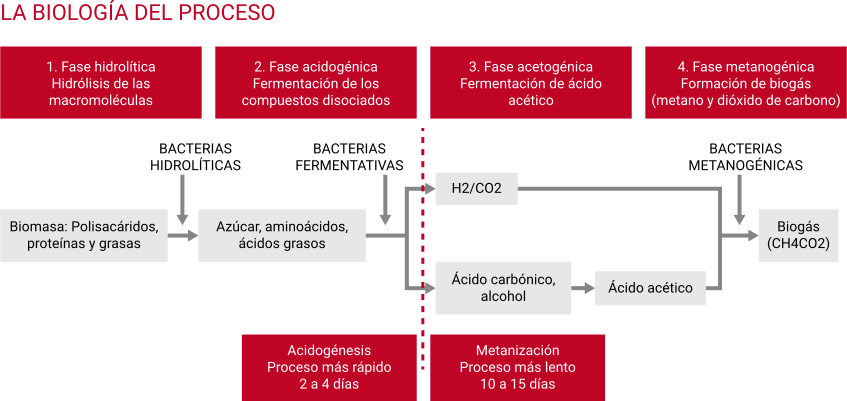
Phases of anaerobic digestion
Hydrolysis
Acidogenesis
Acetogenesis
Methanogenesis