
R&D&I: CDTI Project 2019-2022
26 de May de 2022Fungi as allies in the fight against antibiotic ubiquity
Spain continues to top the list of European Union countries in terms of antibiotic consumption
Nearing the century since Alexander Fleming’s great invention, society today faces a serious problem: antibiotic resistance in the bacteria with which it lives daily. Despite the fact that in our country the consumption of antibiotics has been reduced in recent years (7% in humans and 14% in the veterinary field) according to data from the National Plan against Antibiotic Resistance (PRAN) approved in 2014, Spain still tops the list of European Union countries, with 3.000 t/year of antibiotics consumed out of the 12,000t/year registered in the whole EU.1 The inadequate and excessive prescription of these drugs in the health and veterinary sector has resulted in both the population and livestock being exposed to low doses of antibiotics on a constant basis. This has led to the emergence of resistant bacteria, which, according to the European Commission, cause tens of thousands of deaths per year in the EU1.

Once in our body, the antibiotics pass into the water through the feces. These persist to the treatment applied in the Wastewater Treatment Plants and are easily dispersed in the soil and agricultural products that are cultivated in it through irrigation water. Likewise, the accumulation and uncontrolled application of livestock waste to the field leads to soil and groundwater contamination due to the formation of leachates that permeate through the soil until they reach the aquifer. In this context and in order to investigate new biotechnologies capable of mitigating this problem, KEPLER is currently executing the R&D project “Development of new biotechnological treatments in the use of agri-food waste and the recovery of soil and water contaminated with organic compounds”. The main objective of this project is to evaluate the potential of fungi in symbiosis with certain bacterial consortia during the valorization of agri-food waste in the form of biogas in the anaerobic digestion process, as well as during the recovery of soil and water contaminated with organic compounds and antibiotics. KEPLER has the collaboration of the Autonomous University of Madrid (UAM) and the Technological Center of San Sebastian (CEITIK4) to address this technological challenge that aims to contribute to mitigate this threat to public and environmental health that we are currently facing.
This project has been co-financed by the European Regional Development Fund (ERDF) with the aim of promoting technological development, innovation and quality research.
A way of making Europe
KEPLER SL INGENIERIA Y ECOGESTION, S.L.
BIORREFUNG: “DEVELOPMENT OF NEW BIOTECHNOLOGICAL TREATMENTS FOR THE USE OF AGRI-FOOD WASTE AND THE RECOVERY OF SOIL AND WATER CONTAMINATED WITH ORGANIC COMPOUNDS”.


Publicaciones más recientes
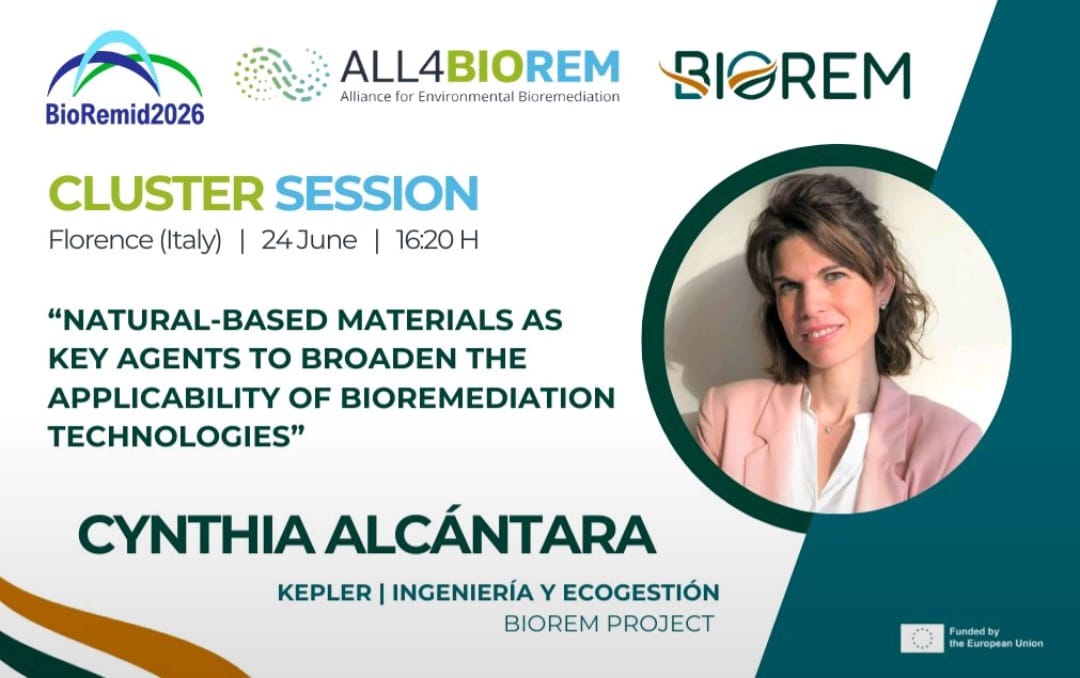
Participation in the 4th International Meeting on New Strategies for Bioremediation and Environmental Restoration – BioRemid 2026
Last Wednesday, 24th June, our colleague Cynthia Alcántara delivered a presentation entitled “Nature-Based Materials as Key Agents for Broadening the Applicability of Bioremediation Technologies” at the 4th International Meeting on New Strategies for Bioremediation and Environmental Restoration (BioRemid 2026), held in Florence, Italy. The main take-home messages of this talk were: KEPLER team would like […]
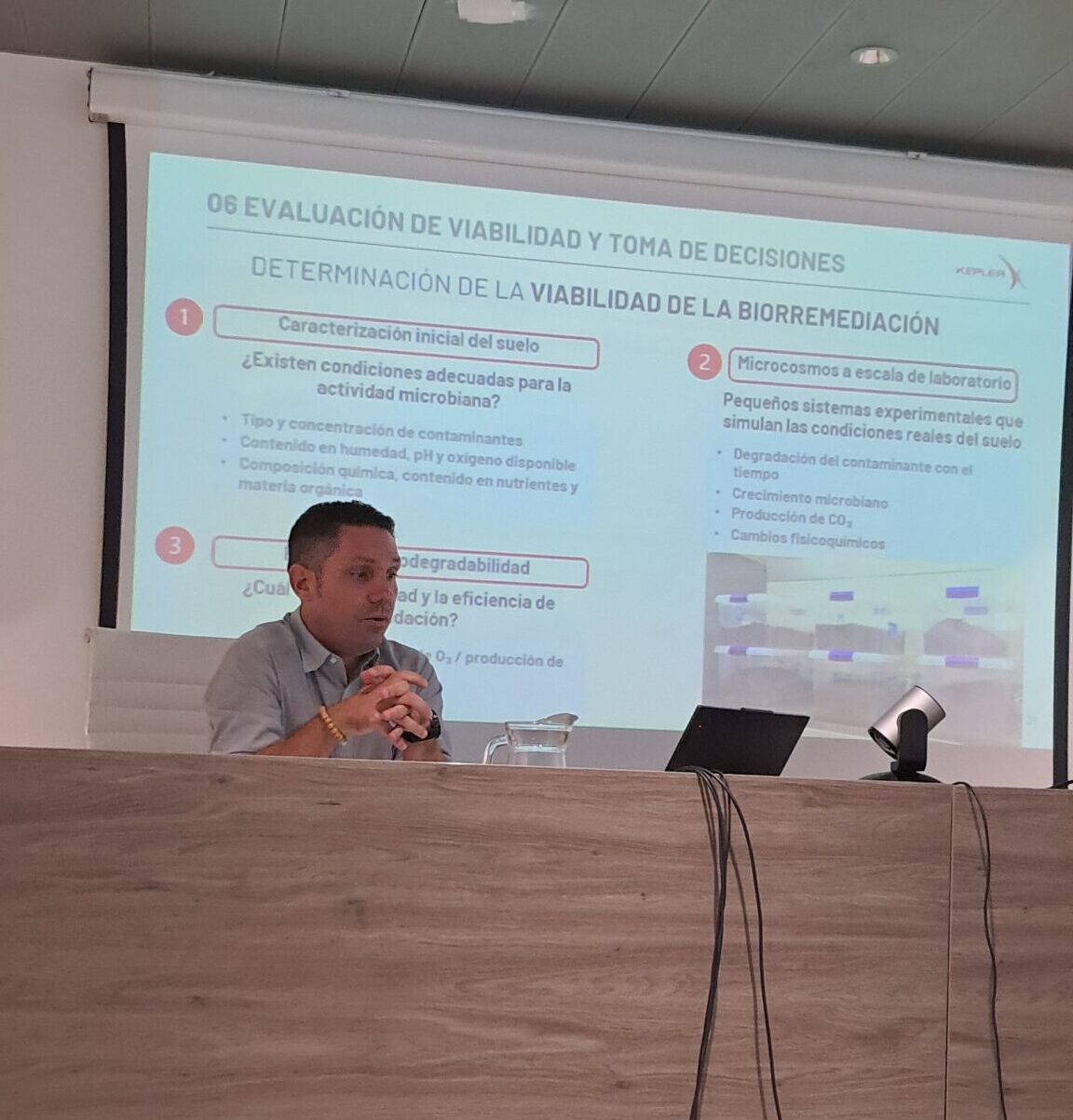
AAP Training Course Soil Biodiversity Monitoring and Soil Health: Applications. Junta de Andalucía
Last Tuesday, our colleague Justo Tenorio took part as a lecturer in the IAAP Training Course, organised by the Waste and Soil Quality Service of the Directorate-General for Environmental Sustainability and Circular Economy of the Regional Government of Andalusia, entitled “Soil Biodiversity Monitoring and Soil Health: Applications”. During his session on opportunities for environmental valorisation, […]
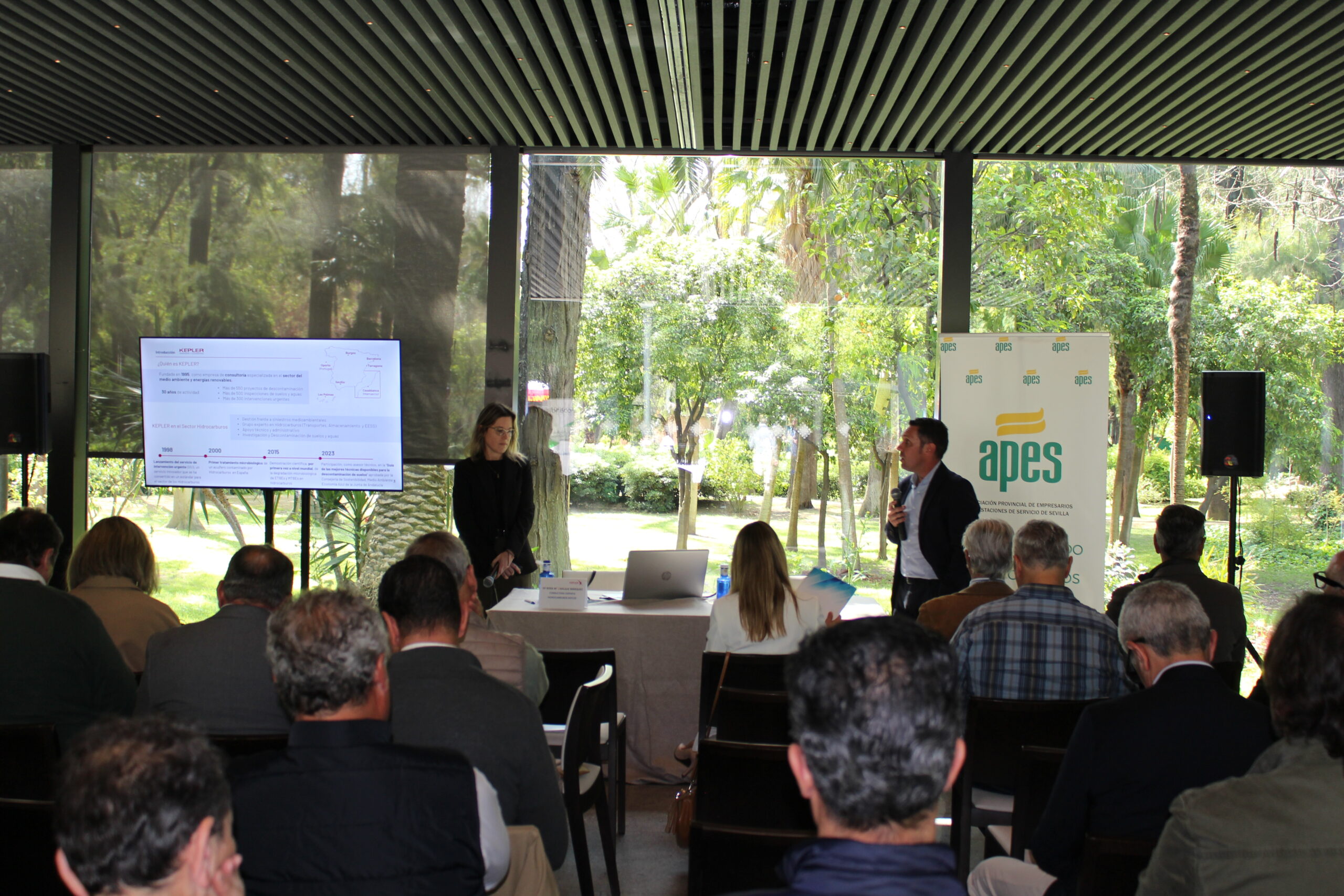
Participation in the APES 2026 Conference
Last Wednesday we had the pleasure of participating in the event organized by the Provincial Association of Service Station Business Owners of Sevilla (APES Sevilla). During the meeting, we addressed a critical issue for operators and owners: the “Management of Potentially Contaminated Soils at Service Stations.” In summary, we presented key aspects of identifying contamination […]