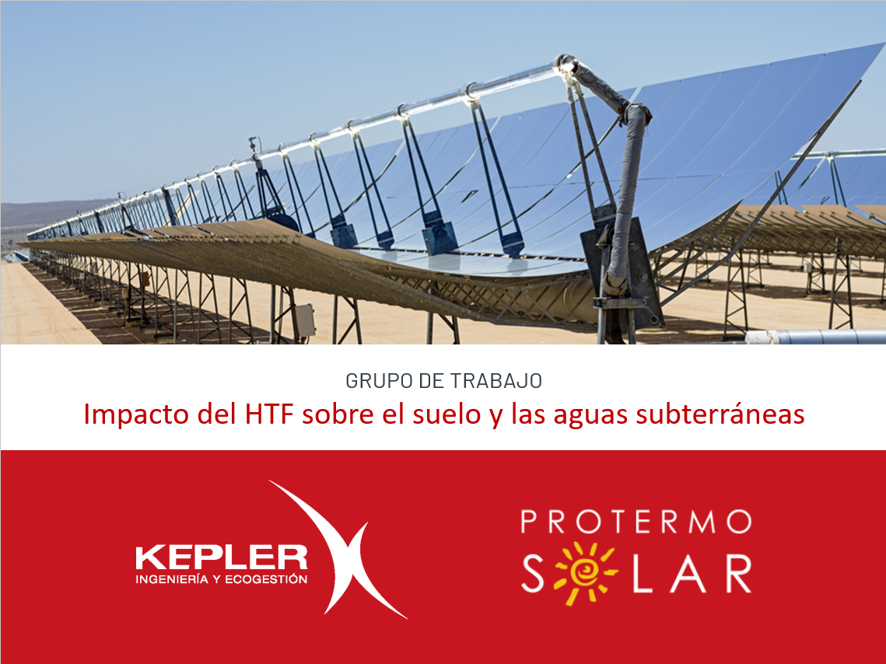
KEPLER addresses regulatory investigations into the Environmental Impacts of Heat Transfer Fluid (HTF) at the 3rd Session of the Protermosolar Working Group
1 de October de 2026KEPLER, Ingeniería y Ecogestión, participated as a speaker in the third session of the Protermosolar Working Group, sharing its expertise as an inspection body in the investigation and assessment of environmental impacts associated with concentrated solar power (CSP) facilities.
Representing KEPLER, Jesús Osma Carmona, consultant and inspector at the Inspection Entity, delivered a presentation on Tuesday, September 22, focusing on the regulatory investigation of potential environmental impacts resulting from heat transfer fluid (HTF) spills. The presentation covered the entire process, from the initial response to the incident through site investigation, environmental damage assessment, and subsequent monitoring.
An investigation conducted within the Environmental Regulatory Framework
One of the key points highlighted during the session was that managing an incident with potential impacts on soil or groundwater requires a regulatory, technical, and traceable approach, rather than focusing solely on the immediate response to the spill.
Depending on their activities and classification, energy production facilities may fall within the regulatory framework governing potentially soil-contaminating activities (APC). Law 7/2022 establishes obligations for operators of these activities and maintains the regulatory framework developed under Royal Decree 9/2005, which sets out the criteria for the investigation, risk assessment, and remediation of contaminated soils.
In this context, investigating environmental impacts resulting from an HTF spill requires an objective assessment of what occurred, where the contamination took place, its extent, which natural resources may have been affected, and how the contamination is evolving over time.
It is precisely in this context that the role of an Inspection Body operating under the UNE-EN ISO/IEC 17020 standard becomes particularly relevant, applying the principles of competence, independence, and impartiality that are fundamental to inspection activities.
From Incident Response to Environmental Investigation
During the presentation, the different stages to be considered in the event of a potential HTF spill were examined:
- Characteristics and behavior of heat transfer fluid (HTF), including its fate and transport once it reaches the soil.
- Immediate response measures following a spill, aimed at controlling the contamination and preventing its spread.
- Site investigation, using the appropriate tools and techniques to characterize the contamination and determine its spatial distribution. This process is based on international standards and regional environmental investigation guidelines and implemented through KEPLER’s established procedures.
- Assessment and quantification of environmental damage to both soil and associated groundwater, establishing a technical basis for evaluating the extent of contamination.
- Monitoring the evolution of contamination, through regular assessments to evaluate contaminant behavior and the effectiveness of the measures implemented.
- Environmental remediation of the affected site, in accordance with the principles established under soil protection and environmental liability legislation.
Environmental Liability and Damage Remediation
The investigation of an incident of this nature must also be considered within the framework of Law 26/2007 on Environmental Liability and its implementing regulation, Royal Decree 2090/2008.
This regulatory framework establishes provisions for the prevention and remediation of environmental damage, including the implementation of measures to prevent and avoid environmental harm and, where damage has occurred, to restore the affected natural resources.
Therefore, in the event of a potential HTF spill, the investigation does not end with identifying the source of contamination or removing the spilled product. A thorough technical characterization is essential to determine the extent of contamination, assess the affected natural resources, establish the necessary corrective measures, and subsequently monitor the evolution of environmental conditions.
KEPLER’s Role as an Inspection Body
Through its participation, KEPLER, Ingeniería y Ecogestión demonstrates its ability to provide a comprehensive approach to the investigation of environmental contamination, combining technical expertise, inspection experience, and the application of the relevant regulatory framework.
Responding to incidents of this nature requires an integrated, multidisciplinary approach and, above all, ensures that the investigation generates objective, technically sound, and traceable evidence to support decision-making and compliance with applicable environmental obligations.
KEPLER would like to thank Protermosolar for the opportunity to participate in the third session of its Working Group and to share our expertise with its members in an area of growing importance for concentrated solar power (CSP) facilities.
Prevention, thorough investigation, and monitoring of environmental impacts are essential to ensuring the proper management of facilities and an effective response to potential incidents.
Publicaciones más recientes
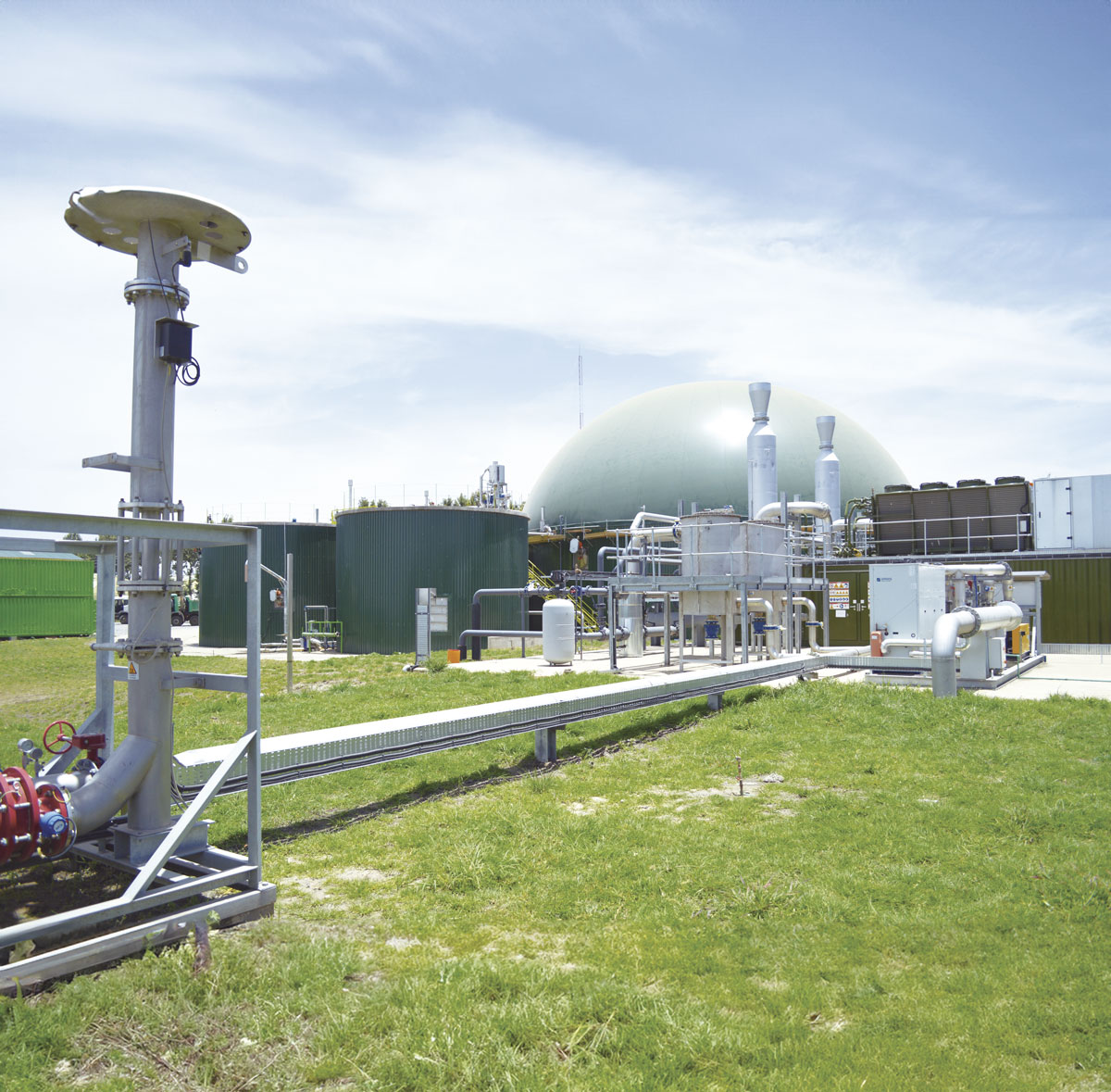
The Strategic Role of Biogas Plants in Agriculture, Livestock Farming, Energy and the Local Economy
Few types of infrastructure generate as much debate today as biogas plants. Numerous local residents’ groups have emerged in opposition to them, and many of their concerns are understandable. However, we believe the discussion has become polarized and is often based more on perceptions than on rigorous studies and reliable data. A constructive debate would […]
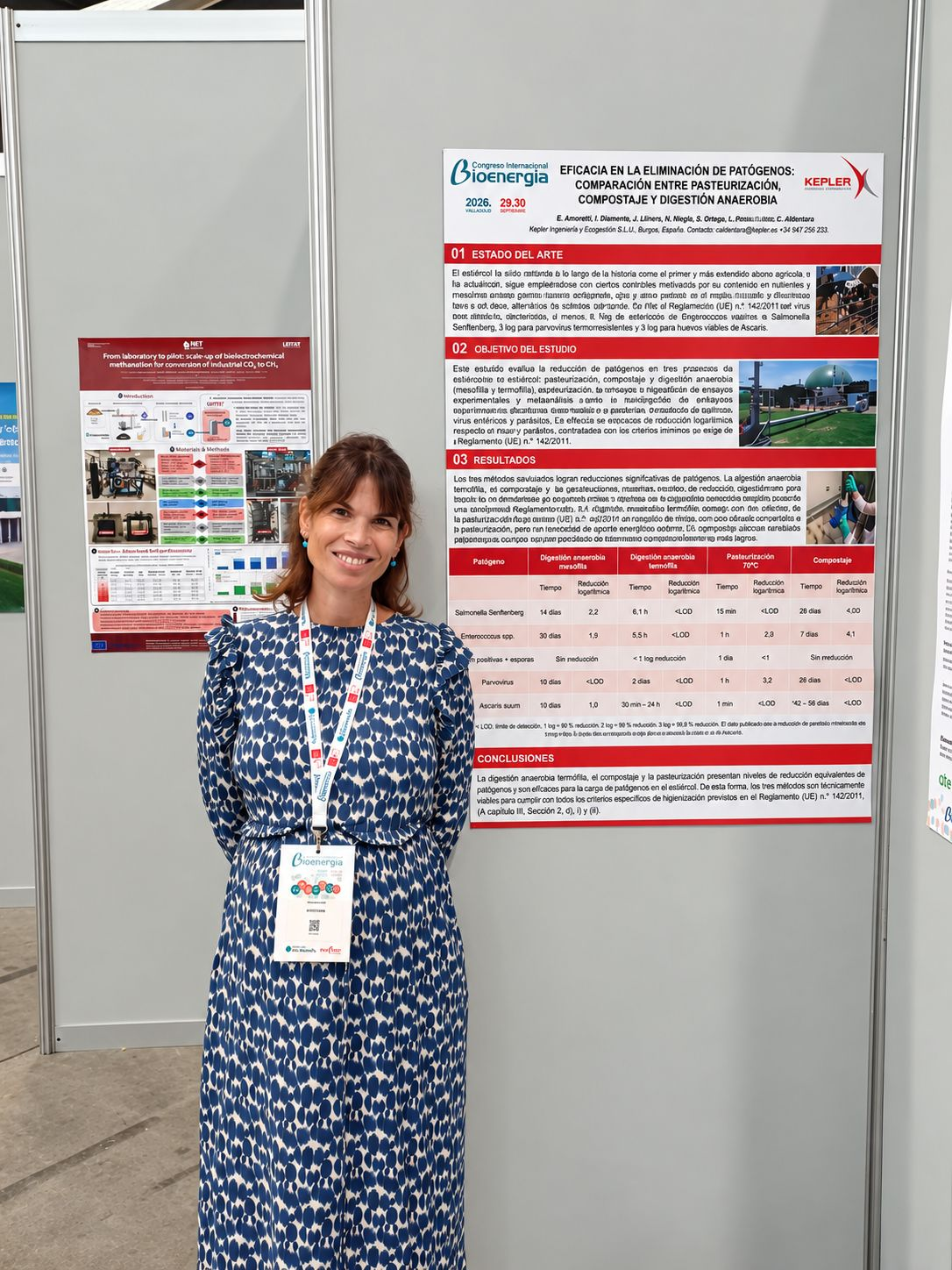
KEPLER Participates in the 19th International Bioenergy Congress, “Renewable Gases: Local Energy for a More Sustainable, Competitive and Resilient Economy”, and the Renewable Gas Trade Fair in Valladolid
Once again, KEPLER Ingeniería y Ecogestión has participated in the 19th International Bioenergy Congress, “Renewable Gases: Local Energy for a More Sustainable, Competitive and Resilient Economy”, held alongside the Renewable Gas Trade Fair in Valladolid. During the event, KEPLER had the opportunity to present a new specialized training initiative: the University Programme in Biogas Plant […]
KEPLER addresses regulatory investigations into the Environmental Impacts of Heat Transfer Fluid (HTF) at the 3rd Session of the Protermosolar Working Group
KEPLER, Ingeniería y Ecogestión, participated as a speaker in the third session of the Protermosolar Working Group, sharing its expertise as an inspection body in the investigation and assessment of environmental impacts associated with concentrated solar power (CSP) facilities. Representing KEPLER, Jesús Osma Carmona, consultant and inspector at the Inspection Entity, delivered a presentation on […]