
The climate connection between temperature, CO2 and KPIs
17 de January de 2022The aforementioned article focuses on multiple observations that provide evidence of a climate change that began decades ago. All of them focused on demonstrating a gradual increase in the average temperature of the earth’s surface and that this increase in temperature is accompanied by an increase in the concentration of carbon dioxide and other greenhouse gases (GHG). There is a clear relationship between the two and it is certain that in the last 500,000 years, the concentration in the atmosphere has never reached such high values as in recent years. The majority opinion assumes that the increase in GHGs is the trigger for the increase in the earth’s surface temperature.
Modern Climate Science can be said to have been created in 1903 by the Norwegian physicist Vilhelm Bjerknes with the creation of a Dynamic Meteorology2. He was the first to attempt to describe and model the complex processes of this discipline by means of an entangled system of seven nonlinear partial differential equations. These models have undergone an evolution that in the last 70 years goes hand in hand with the evolution of the computational capacity of computers. At the same time, however, research into the basic physical processes of climate has been neglected.
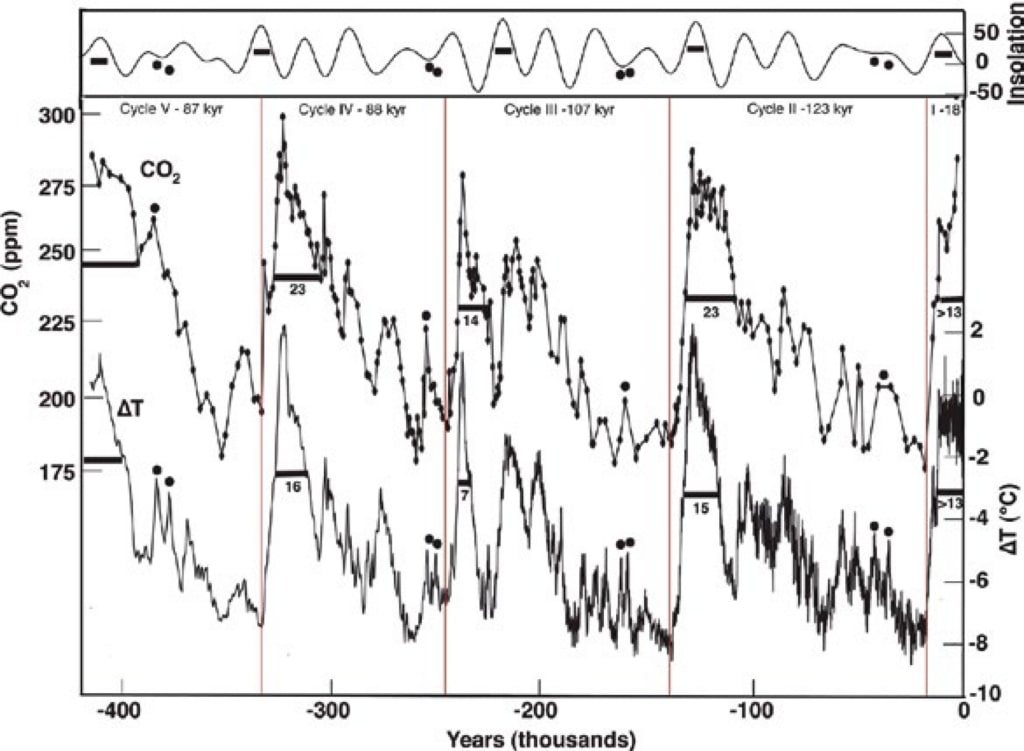
In his publication, Pascal Richet1 asks whether the historical climatological data of the last 423,000 years allow us to deduce that the increase in the concentration of carbon dioxide (and methane) may have been a trigger for the increase in the earth’s surface temperature. To this end, he has studied the connection between the latter and the concentration of carbon dioxide and methane in the atmosphere, analyzing the evolution of these three parameters over the past 423 thousand years. In addition to analyzing the available experimental data, he resorts to an interesting epistemological examination.
From the geochemical analysis of ice cores up to 3,200 m deep obtained at the Vostok station in the Antarctic, both the evolution of Antarctic temperature and the concentration ofCO2 and CH4 over 423 thousand years covering 5 glacial and interglacial cycles have been determined.
Temporal analysis of the earth’s insolation intensity cycles over this long period of time allows us to establish a relationship between insolation, temperature andCO2 concentration. These cycles are named after the Serbian mathematician, astronomer, geophysicist and civil engineer Milutin Milankovitch (1879-1958) who studied in depth the relationship of glacial and interglacial cycles as a function of these parameters and their cyclic variations. Milankovitch found that these cyclic changes in the intensity of the earth’s insolation correspond to astronomical phenomena, namely orbital changes caused by eccentricity, obliquity and oscillation on the axis of rotation (precession).
Analyzing these cycles (Figure 1) we find:
1º) That the temperature peaks are in thousands of years narrower than those ofCO2.
2º) ThatCO2 peaks have a time lag with respect to temperature peaks of 1.3 ± 1.0 thousand years.
3º) That the large peaks are controlled by variations in insolation due to the aforementioned astronomical cycles.
Assuming that variations in temperature are caused by variations inCO2concentrationinthe atmosphere, one is faced with contradictory observations that, although theCO2 concentrationremains high, the temperature has started to fall thousands of years earlier or that in the same time period of oneCO2 peak there are two peaks in temperature (points shown in Figure 1).

The change in temperature induces a change in the concentration of chemical species in the atmosphere. In the case ofCO2, its concentration in the atmosphere increases with increasing temperature because its solubility in seawater decreases. In this regard, it should be noted that the amount ofCO2 stored in the atmosphere is only a small fraction of that in the oceans.
The work carried out by Pascal Richet and other authors to whom he refers does not question the existence of climate change, but only seriously questions whether it is triggered by anthropogenic effects. The data obtained from the ice probes at the Vostok station show that there is no physical evidence that the increase inCO2 concentration in the atmosphere could have caused a significant increase in the average temperature of the earth’s surface, contradicting the results obtained from the extraordinarily complex mathematical models of climate simulation.
The value of a model is measured by its ability to replicate experiments and to make predictions. There are few theories that have been widely accepted by the scientific community without being validated by experiment. It was many years before this could be done with the General Theory of Relativity. When Einstein was reproached for this unacceptable lack, he replied that his Theory is so beautiful that it is enough, being really true that it is one of the most beautiful theories that man has ever created.
Today, a scientist is someone who knows everything about an insignificant part of universal knowledge but has no global vision. The doctrine is to produce many publications on this insignificant part of the great sea of knowledge. If the ideal of the renaissance man had been developed, a scientist should be a person who has a balanced knowledge and experience among the different branches of knowledge and doing, among theology, philosophy, history, justice, economy, medicine, pharmacology, agriculture “the mother of all cultures”, psychology, languages, mathematics, astronomy, physics, chemistry, biology, civil engineering, industrial engineering, and “last but not least” art and literature. It would be essential to add manual skills in order to maintain a balanced neuronal activity according to the famous rule of St. Benedict “Ora y Labora”. In my opinion and from my experience, very little can be understood and done without deep knowledge in other disciplines. A simple example: tides cannot be understood without knowledge of astronomy. Increasing specialization has led to an enormous lack of interconnectedness of knowledge. A society composed only of specialists leads to unreason and decadence.
In complex climate change models, with a large number of variables, many of them complex functions of other variables, the calculation of error propagation becomes too uncertain or impossible. Today’s scientists, highly specialized in their respective disciplines, rarely concern themselves with epistemology as Richet does, when he turns, among other philosophical reflections, to Aristotle’s“principle of non-contradiction“, i.e. that the model must not contradict observation and experiment.
In my opinion the so-called Greenhouse Gas emissions serve as a good KPI of environmentally sustainable management rather than as a parameter to measure mankind’s influence on the global climate.
REFERENCES
” 1 “The temperature –CO2 climate connection: an epistemo- logical reappraisal of ice-core messages” – Pascal Richet. Institut de Physique du Globe de Paris. History of Geo- and Space Sciences, 12, 97-110, 2021.
“2 Physik Journal 7, July 2021 – Geschichte der Klimafors-chung. – Prof. Dr. Matthias Heymann
Publicaciones más recientes

Participation in the 4th International Meeting on New Strategies for Bioremediation and Environmental Restoration – BioRemid 2026
Last Wednesday, 24th June, our colleague Cynthia Alcántara delivered a presentation entitled “Nature-Based Materials as Key Agents for Broadening the Applicability of Bioremediation Technologies” at the 4th International Meeting on New Strategies for Bioremediation and Environmental Restoration (BioRemid 2026), held in Florence, Italy. The main take-home messages of this talk were: KEPLER team would like […]
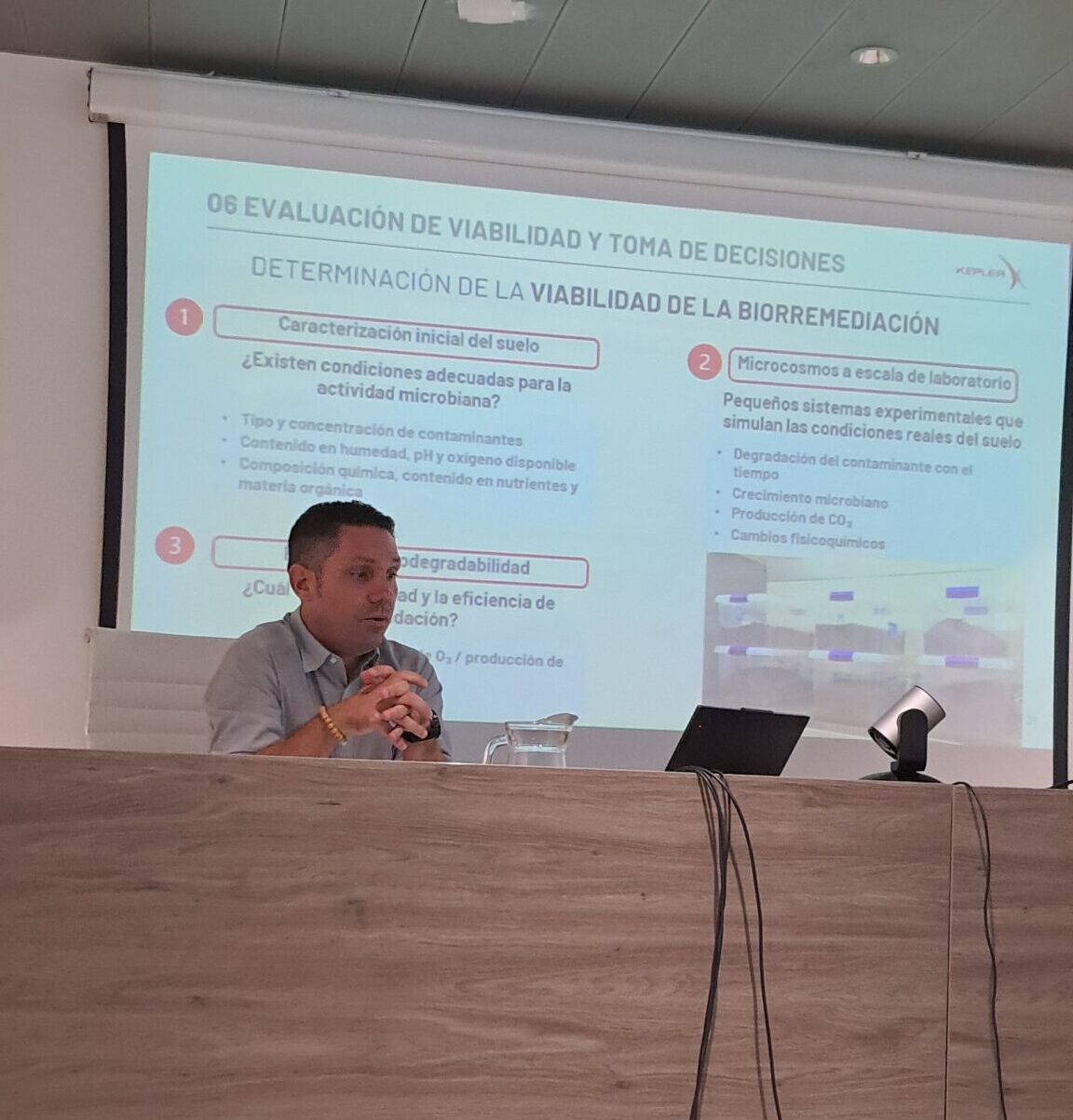
AAP Training Course Soil Biodiversity Monitoring and Soil Health: Applications. Junta de Andalucía
Last Tuesday, our colleague Justo Tenorio took part as a lecturer in the IAAP Training Course, organised by the Waste and Soil Quality Service of the Directorate-General for Environmental Sustainability and Circular Economy of the Regional Government of Andalusia, entitled “Soil Biodiversity Monitoring and Soil Health: Applications”. During his session on opportunities for environmental valorisation, […]
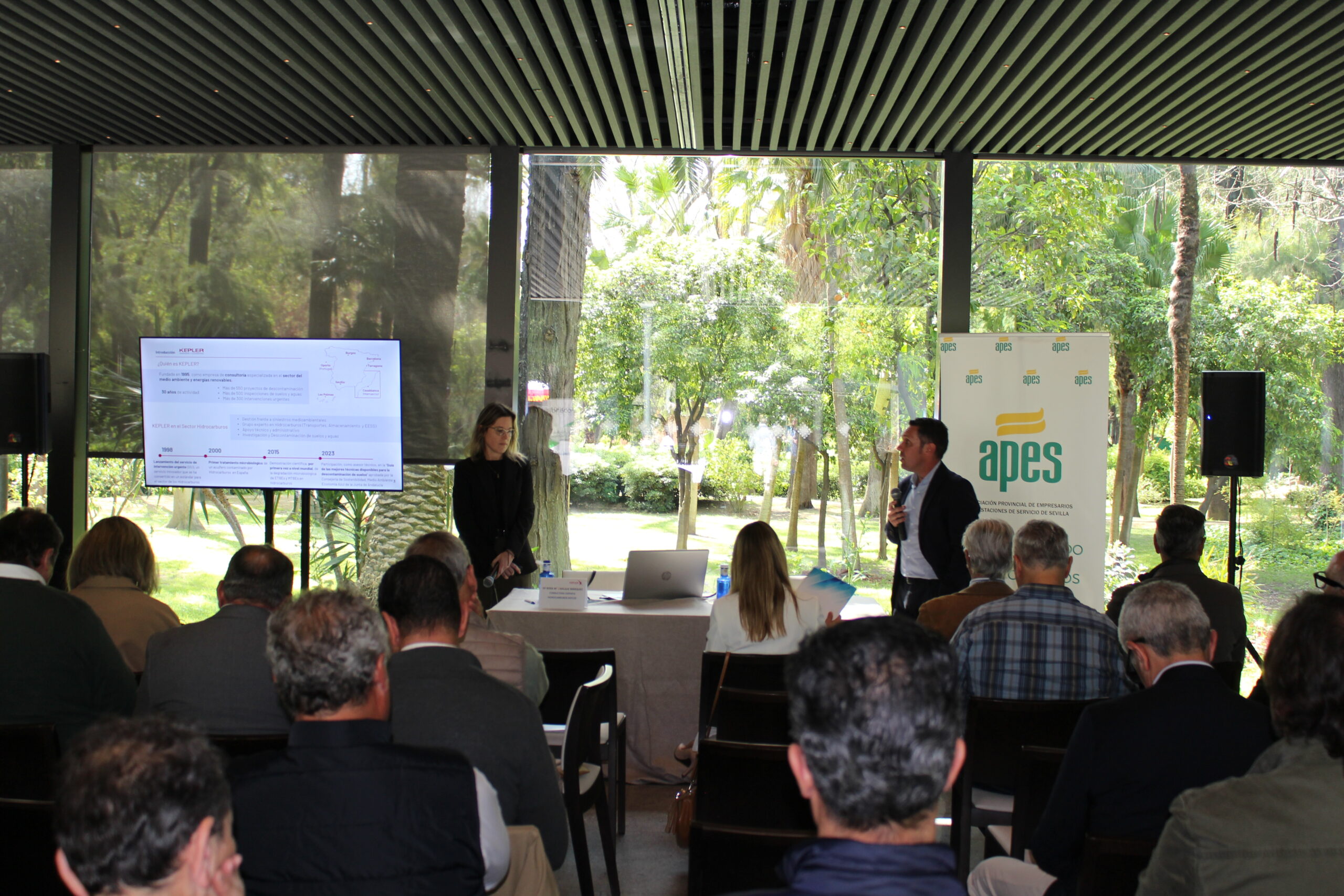
Participation in the APES 2026 Conference
Last Wednesday we had the pleasure of participating in the event organized by the Provincial Association of Service Station Business Owners of Sevilla (APES Sevilla). During the meeting, we addressed a critical issue for operators and owners: the “Management of Potentially Contaminated Soils at Service Stations.” In summary, we presented key aspects of identifying contamination […]